Showing posts with label south america. Show all posts

Wednesday, February 6, 2008

The Trouble with Dancing Hitler

Here's some excerpts of the most complete English article I've found about the trouble Rio de Janeiro's Viradouro Samba School got into for planning to include a Holocaust themed float among the dozen or so that made up their 2008 Carnival parade.

Dancing Hitler for Carnival Shocks Over-The-Top Rio

By Adriana Brasileiro
Feb. 4 (Bloomberg) -- Even Rio de Janeiro has its limits.
The city, whose annual Carnival celebrations regularly include half-naked women and over-the-top parties, banned a samba group from entering a holocaust-inspired float in the championship this year. The float, with a pile of atrophied concentration-camp victims at its base, was to be accompanied by a dancer dressed as Adolf Hitler.
"The idea of a dancing Hitler on top of dead Jews is outrageous," said Jose Roitberg, a spokesman for Rio de Janeiro's Israelite Federation, which represents Jewish interests and sued to have the float thrown out.
At this point, if you haven't, hop on over to the Viradouro site and pay attention to the flash animation on the home page, which uses a bit-o-montage to explain the theme.

The holocaust float was part of samba group Viradouro's "It Gives You Goose Bumps" show, which portrayed events, movies and characters that make people shiver.
"It's about all the wonderful and terrible things that make your hair stand on end," said Lucia dos Santos, who was in charge of Viradouro dancers dressing as the monsters from the movie "Alien."


Some of the other goose-bump-giving things in the parade: a Kama Sutra-themed float with gold-painted dancers of unclear attire enacting various, um, poses; a ski/snowboard ramp with ski/snowboarders; hundreds of dancing beheaded gentlemen with guillotines strapped to their backs; then a whole garbage-themed float with people in cockroach-costumes swarming around it; and a whole bunch of giant marching bugs--tarantulas and flies, I think. Then the creatures from Alien, some Japanese Geisha-types who for some reason have multiple arms. And (after the Kama Sutra float) courtly ladies with their arms bound to stakes above their heads. I'm getting the order wrong; watching all the videos mixes things up (plus they seem to be cutting between the parade proper and the folks lining up for it).


There was also a huge newborn-baby float featuring, of course, a huge newborn-baby, held up unwashed by its ankles, taking its first breaths. Presumably this was part of the positive things that give you goosebumps, but the rear part of the float had these towers constructed of smaller newborns, such that I couldn't quite decide whether they were supposed to be dead? alive? babies on a stick? Well, clearly the loss of the Holocaust float didn't hurt them in terms of variety or mind-boggling surreality. If they weren't all singing that same catchy song over and over I'd think I was seeing highlights for different Samba groups in different years on different planets, rather than part of a single, coherent theme. OK back to our reporter:

Viradouro lost in court Jan. 31, as Judge Juliana Kalichszteim of the Tribunal of Justice of Rio de Janeiro cited a federal law against Nazi propaganda and racism.

The judge warned that if the school included the float in its parade today, it would be fined 200,000 reais plus 50,000 reais for each dancer dressed as Hitler.

Viradouro didn't accept the court decision without protest. In place of the banned display, the school paraded a float carrying protesters dressed in white tunics with gags over their mouths and a sign that said "The future cannot be built by burying history." A dancer dressed as Joaquim Jose da Silva Xavier, the hero of Brazil's independence known as "Tiradentes," who was hanged in 1792, watched from above with a noose around his neck.

"The restriction to freedom of expression creates a fertile territory for the proliferation of violence, disrespect, brutality and extermination," Viradouro said in a statement on its Web site. "Neither the executioners nor the victims of the tragic history of humanity have the right to hide the facts and dim our memory."

Unlike Charlie Chaplin's "The Great Dictator" and "The Producers," two successful films that took a humorous look at Hitler, Viradouro's float probably failed because it wasn't obviously a satire and may have caught viewers by surprise, said Arnold Aronson, a professor at the theater division at Columbia University's School of the Arts.

"No one was forced to watch the Chaplin film or "The Producers"," which was "presented as ridiculous farce in which Hitler and Nazis were depicted as buffoons," Aronson said in an e-mailed response to questions from Bloomberg News. "A parade float forces itself on everyone who views the parade, and Carnival has a huge and diverse audience."
I don't know about the "Forces Itself on Everyone" argument. There's plenty else that forces itself on the viewer too. Rather, I think the best tactic would be to affirm (at least a little) the performers' desire to play with conventions and distinctions. If they'd done a float focusing on the horrors of Brazilian slavery, for instance, they could have pulled it off with uncomfortable joy, an dancing-on-the-graves sense of things. But this is too much someone else's (many other people's) story for that to work.

That said, if the Nazi float had run, it would have been the worst of the lot, but in the context of a great parade of oddness and creepiness and combined celebration of life and death, the effect would have been diluted. Then again, maybe the dilution, too, would be part of the problem. Though I wonder if all the publicity, and the School's "principled" anti-censorship response really just made the outcome even worse, and less helpful, educative, or edifying all around.

Saturday, July 28, 2007

Letters from the Battle-Fields of Paraguay

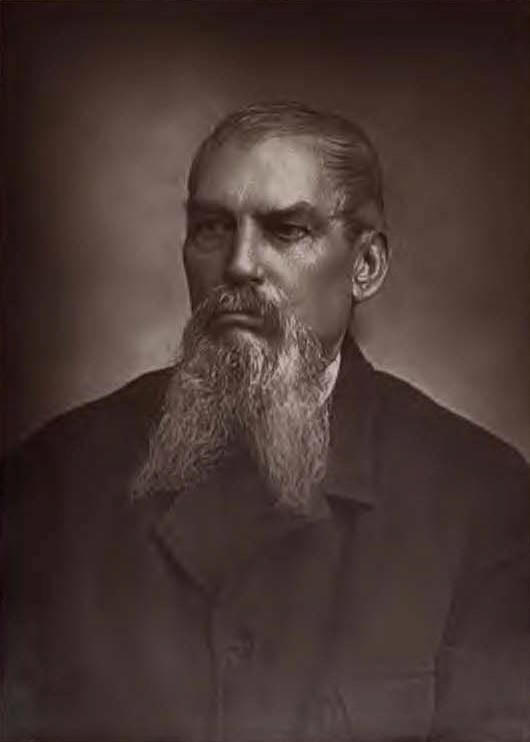
This week I finished reading Richard F. Burton's Letters from the Battle-Fields of Paraguay, a narrative of travels the famed Victorian explorer-linguist-diplomat undertook during the closing phases of the disastrous (but attractively-named) War of the Triple Alliance, at the turn of the 1870s. Burton's journey was a sort of offshoot as his tenure as a British consul to the Brazilian Empire, and it's clear that, as far as the war went, his sympathies were with the Brazilians (and to a lesser extent their Argentine and Uruguayan allies). Like most old travel writing, it refuses to resonate for long with modern interests (hence: his true-to-title detailed descriptions of mouldering earthworks, artillery positions and peculiarities, written for an age familiar, after the Napoleonic, Crimean and US Civil wars, with the terminology), and ruffle modern feathers (of course he says all sorts of insensitive, scornful things about the people and cultures he encounters—though with Burton, it's scorn backed up, right or wrong, by brilliance and deep and broad linguistic and cultural knowledge: twenty-odd languages mastered; as many countries and colonies on four continents explored).

Still there's much of interest to quote—mostly with a wincing sort of humor. So I'll get on with it, in order of appearence in the book. First, some proof of Burton's general view that Paraguay had it (i.e. near-total destruction at the hands of the Alliance) heartily coming:

The war in Paraguay, impartially viewed, is no less than the doom of a race which is to be relieved from a self- chosen tyranny by becoming chair a canon by the process of annihilation. It is the Nemesis of Faith; the death-throe of a policy bequeathed by Jesuitism to South America; it shows the flood of Time surging over a relic of old world semi-barbarism, a palaeozoic humanity. Nor is the semi-barbaric race itself without an especial interest of its own. The Guarani family appears to have had its especial habitat in Paraguay, and thence to have extended its dialects, from the Rio de la Plata to the roots of. the Andes, and even to the peoples of the Antilles. The language is now being killed out at the heart, the limbs are being slowly but surely lopped off, and another century will witness its extirpation. [link]
Luckily the nation, civilization, and language did survive (see an earlier post for a bit more on that). For one so scornful, though, Burton did spend three years "mastering" Tupi-Guaraní, and throughout endeavors to search out proper etymologies for placenames (commenting that if he doesn't, he's sure they'll soon be lost).
And first of the word "Paraguay," which must not be pronounced "Paragay." The Guarani languages, like the Turkish and other so-called "Oriental" tongues, have little accent, and that little generally influences the last syllable : a native would articulate the name Pa-ra-gua-y. [link]
Language done, he moves on to diet. Paraguayans, from what I hear, now eat tons of meat, just like their Southern Cone neighbors.
The Paraguayan is eminently a vegetarian, for beef is rare within this oxless land, and the Republic is no longer, as described by Dobrizhoffer, the "devouring grave as well as the seminary of cattle." He sickens under a meat diet; hence, to some extent, the terrible losses of the army in the field. Moreover, he holds with the Guacho [sic, Gaucho], that " Carnero no es came"—mutton is not meat. Living to him is cheap. [link]
Burton is deeply anti-Jesuital (I wonder what he'd made of the movie The Mission? "Popish propaganda!") and blames the Paraguayans' so-called infiriority on the centuries-past influence of the priests.
A curious report, alluded to at the time by most Jesuitical and anti-Jesuit writers, and ill-temperedly noticed by Southey, spread far and wide—namely, that the Fathers were compelled to arouse their flocks somewhat before the working hours, and to insist upon their not preferring Morpheus to Venus, and thus neglecting the duty of begetting souls to be saved. I have found the tradition still lingering amongst the modern Paraguayans. [link]
For all the scorn and asides, Burton does write beautifully and precisely, especially—to modern eyes—in numerous sections describing the natural vistas of the wide and mighty Paraná river. I've read quite a bit about Argentina but this enriched the picture like nothing else:
The channel winds wonderfully, to the east, to the south, and to the north-west. Rival channels abound, and we often see far beyond the monte-bush, to our right and left, ships' sails passing up over land like the sailing waggons of the Seres. When the waters are out, temporary cross-cuts, as on the great Rio de Sao Francisco, enable boats to cruise across country. The riverine edges wax higher as we advance, and whilst one side grows grass the other becomes tree-clad; higher up, this formation will assume larger and more distinct proportions. From this lower bed the larger animals, so common up stream, have of late been frightened away ; the fish to breed in the tributaries and the less disturbed parts ; and little life save aerial remains. At rare times a bullet head protruded from the water and at once withdrawn denotes the "Nutria" indifferently described as an otter, a seal, or a sea-wolf. The shag, plotus, or diwr, is of two kinds, one dingy brown, the other black with white-tipped wings and a plume that commends itself to what wears bonnets. They gaze at us with extended necks and " bob" down stream, in remarkable contrast with the hunchbacked, motionless Mirasol or white crane, standing one-legged and meditative on the bank, and with the Socoboi, the large ash-coloured heron, roaring like a bull because we dare to disturb him. [link]
But, soon enough, back to scorn. Burton finishes with the boring paltry fortifications and arrives in Asuncion, the evacuated, occupied Paraguayan capital (the dictator Lopez having taken his soldiers into the jungle to fight to the end). That final sentence presages great bitter 20th century travel writers like Graham Greene, V.S. Naipaul and Paul Theroux:
A few paces beyond the cathedral lead us to the Hotel de la Minute. The house once belonged to a Paraguayan of importance. It fronts a new theatre of ambitious size, said to be built upon the model of " La Scala/' and fitted for 1000 spectators. Its flanks are one hundred yards long; in fact, it occupies a whole " cuadra."* The brick walls that back the three tiers of boxes are four feet thick; they must be fearless of fire, and, after the usual theatres of South America, they suggest the Coliseum. The building was unfinished, and of course a dead mule occupied the inside. [link]
Finally he gets round to the weather:
It is popularly said here, as in the Brazil, that summer and winter meet in one day, and that Paraguay combines the four seasons in twenty-four hours. Between midnight and 6 A.M., it is spring; summer then extends to noon: the third quarter is autumn; and from 6 P.M. to midnight it is winter. [link]
One closing note: Burton himself enjoys poking fun at the various names given to Paraguay by analogy-hungry writers of his era: "The China of South America" (both closed contries! both grow 'tea'!), "The Sebastopol of the South" (just like the Crimea! in that there was a war!), and—my favorite—"Prester John's Southern Kingdom" (a lost tribe of primitive, wealthy Christians!). And, clearly, so do I.

Thursday, July 26, 2007

High-End Architecture for the Poor: Solidarity or Slumming?

Simon Romero / NYTimes:

MEDELLÍN, Colombia, July 11 — Dressed in jeans and a T-shirt, sporting three days’ growth of beard and unruly hair nearly down to his shoulders, Sergio Fajardo looks every bit the nonconformist mathematician who spent years attaining a doctorate at the University of Wisconsin.

But that was a past life for Mr. Fajardo, this city’s mayor and the son of one of its most famous architects. Now he presses forward with an unconventional political philosophy that has turned swaths of Medellín into dust-choked construction sites.

“Our most beautiful buildings,” said Mr. Fajardo, 51, “must be in our poorest areas.”

With that simple idea, Mr. Fajardo hired renowned architects to design an assemblage of luxurious libraries and other public buildings in this city’s most desperate slums. [full article]
So on the one hand: what a cool idea! And how refreshing to hear about a leader working to bridge the gap between rich and poor by giving the latter some actual good, helpful services, and by honoring them with "the best" rather than "the adequate". The article does touch on a couple of critiques for such a scheme—wouldn't it be better to spend the money on improving basic services?, and um, do the folks in the neighborhood actually appreciate the "beauty" that their mayor's worked to bring to them? Sometimes high-concept architecture gets, um, tried out on the poor because it's easy for visionary city planners to push it through on them. I remember the first time I went to New York City, riding the train past all these massive housing project towers, and realizing it looked exactly like the early 20th century futurism I'd been reading about—Corbusier and his World's Fair knockoffs, "the home as a machine for living" etc. Back then the visionaries had said, "in the future we'll all live in these great planned housing complexes". So they built them first for the poor, to prove the concept. But in the end the rich never signed up for their own housing projects—so the only people who lived in the futuristic world were those who didn't have much choice.

Back to Medillin—for a while I've been puzzling over why, when it comes to my Colombian news, I prefer the front page of the Medillin El Colombiano over the better-designed, more-nationally-focused, Bogotá-based El Tiempo. (I've linked the websites, but visit Newseum to see the latest front pages: El Colombiano; El Tiempo) I think maybe it's to do with the mix of big-city news and charming provinciality—the annual flower fair, or textile week. Plus lots of coverage of cycling and inline skating. But also, the article made me realize, quite a bit about public art (both high-concept sculpture and more populist Christmas lights on the aerial tramway). So perhaps the mayor's to thank for that. I hope his work appeals to the locals—from every background—even more than it does to me.

Tuesday, July 3, 2007

The Victoria Falls of South America

Yes, the title is ironic, but not in the way you might think.

To start, let's set the scene with some video, courtesy a couple of quick YouTube searches


Iguazu Falls/Cataratas del Iguazú/Cataratas do Iguaçu, Argentina/Brazil, South America


Victoria Falls/Mosi-oa-Tunya, Zambia/Zimbabwe, southern Africa


Nothing inspires, and inspires rivalry, like a good big thundering waterfall. A few months back, inspired by travelling friends, I began researching a catarract I knew about but had never visited, Iguazu Falls in South America. What I found was that when it comes to a giant waterfall, people want to know just how giant, and speciffically whether it's gianter than any other waterfall (which is a more difficult question than you might think, given the multi-dimensionality of waterfalls: height, width, flow at a given moment—imagine if Mt. Everest's prestige point for climbers was not that it's the tallest, but by some complicated, debatable formula the biggest. Oh the arguments we'd have!).

In the comparisons I found, Niagra Falls usually gets brought in the picture, especially in the older articles and guidebooks, but that's usually for the quick dismissal of a known quantity. The real showdown, of course, is invariably with Iguazu's African analogue, the probably-more-famous Victoria Falls. Depending on your point of view, Iguazu is "The Victoria Falls of South America"; and Victoria's the "African Iguazu".

(Back in my days editing travel guides such comparisons alternately amused and annoyed. Any city with canals becomes "The Venice of Wherever". The problem with such comparisons is that you're kind of implying the inferiority of the lesser-known part of the equation. "It ain't Venice, but it's the best we've got!")

And indeed, I was amused and annoyed at the waterfall-showdowns. But then I went looking for old maps and discovered something fascinating and (apparently) forgotten.

The Library of Congress's American Memory site proved, as ever, a great good treasure trove. (though difficult to link from ... I've moved some map images over to the blog; to find out more you can, of course, pop over search by the map name or keyword).

All right, first, let's get oriented with this 1998 CIA map. The Falls aren't labelled, but they're right next to the Triple Frontier between Brazil, Paraguay, and Argentina, where the Rio Iguazú flows due west into the Rio Paraná:


South America (1998)


Things were proceeding much as expected ... the falls were unlabeled, or marked with the name of the Brazilian border town, Foz do Iguaçu. But then I clicked onward to an 1873 map, from an atlas published by Charles Black and Co., Edinburgh, Scotland, and saw, where the Rio Iguazú flows into the mighty Paraná, an unfamiliar—or rather, too familiar—name:


Brazil, Uruguay, Paraguay & Guayana. (1873)


Instead of Salto del Iguazú, it was labelled Salto Victoria—literally, Victoria Falls! Was this some kind of Rule Britannia-style joke by the Scottish geographers? Some kind of continental clerical blunder? Or a cruel brief renaming of the falls in honor of Brazil and Argentina's then-recent evisceration of Paraguay during the War of the Triple Alliance?

Over the next few days I dug up more info on the surprising references to Iguazu Falls as Salto Victoria. I did find one other old map (Brazilian, 1908) with it labelled as Salto Victoria. All the others either just marked it as "salto" or didn't show anything beyond the intersection of the Iguazú and Paraná rivers.


Mappa geral da Republica dos Estados Unidos do Brasil (1908)


Paraguariæ Provinciæ soc. jesu cum adiacentibg. novissima descriptio ... (1732)


Having gotten through the maps, I started in on text searches—all but the first are from the ever-expanding 19th century universe that is Google Books. Thus, I guess, the 19th century all caps headlines. Anyway.


A BRIEF, LONG HISTORY — A VICTORIA BUT NO FALLS

Here's a story of the Falls' naming from an Argentinian tour operator:
A tourist venue par excellence, it was first glimpsed in the year 1542, when Alvar Núñez Cabeza de Vaca was crossing from the Atlantic Ocean to Asunción in Paraguay. The conquistador, amazed at the sight of the falls, christened them as "Saint Mary's Falls", a name which over time was replaced by its primitive Guaraní name: "Iguazu" (I: water; Guazú: great), i.e. "great waters".
Iguazu. At that time the region was inhabited by natives of the Mbyá-Guaraní tribe, who, around 1609, began to live within the evangelizing influence of the Jesuit fathers, who set up an experiment unique to Latin America: the establishment of a system of "reductions", that at its height included 30 towns scattered throughout the regions of the Tapé and the Guayrá (currently the south of Brazil and Paraguay), all the Argentine province of Misiones, and part of the north of Corrientes.

Political and economic differences with the throne of Spain led to the expulsion of the Jesuits from the region in 1768. The zone of the waterfalls passed into oblivion from then on until August 1901, when the explorer Jordan Hummell organized the first tourist excursion to the area. One of those travelers was Victoria Aguirre, who, when this excursion had to turn back for lack of proper roads, donated a large sum of money to open a land-route between Puerto Iguazu and the waterfalls. This date marks the beginning of tourist trips to Iguazu, and has been claimed by the community as its foundation day, in homage to Victoria Aguirre, who then became a kind of protector, a driving force for the growth of tourism and of the population.

———

THE CONQUISTADOR CABEZA DE VACA DISCOVERS THE FALLS —BUT DOESN'T MENTION WHAT (IF ANYTHING) HE CALLED THEM

"The current of the Yguazú was so strong that the canoes were carried furiously down the river, for near this spot there is a considerable fall, and the noise made by the water leaping down some height rocks into a chasm may be heard a great distance off, and the spray rises two spears high and more above the fall. It was necessary, therefore, to take the canoes out of the water and carry them by hand past the cataract for half a league with great labor. Having left that bad passage behind, they launched their canoes and continued their voyage down to the confluence of this river with the Paraná."

—Alvar Nuñez Cabeza de Vaca, Commentaries, translated in The Conquest of the River Plate (1535-1555) (New York: 1891)

Also, this French chronology mentions Cabeza de Vaca's discovery of the falls "later called victoria". And an 1892 New York Geographical Survey account mentions a "magnificent but little-known cataract called 'Salto Victoria' or the 'Hundred Cataracts'. These falls occur on the Iguazú River, a branch of the Paraná, about twenty miles from its mouth." After describing the trouble one must take to get upriver to view the falls, we get the usual extreme traveller's payoff:
The numerous tributary streams pouring over these cliffs, together with the principal cataracts form such a bewildering mass of falls, that one is utterly overwhelmed with the sublimity of the scene; and probably for combined beauty and grandeur of scenery, for wildness and variety of aspect, the "Hundred Cataracts" stand unsurpassed.


———

BUT NOW: PROOF THAT BRITISH AND BRAZILIAN REFERENCES TO THE SOUTH AMERICAN FALLS AS "VICTORIA" PREDATE LIVINGSTONE'S ARRIVAL AT THE AFRICAN FALLS

"The Rio Iguassú, or Curitiba, runs east and west for about 300 miles: it is navigable in the middle of its course, but before it reaches the Rio Paraná it forms a succession of water-falls, of which one, about 10 miles from its moth, is said to be 120 feet in perpendicular height; this fall is called Salto de Victoria. The country on both sides of the lower parts of its course is thickly clothed with high timber-trees."


"Victoria.
Cachoeira do rio Iguaçu, 15 legoas pouco mais or menos, acima de sua confluencia com o rio Paraná. Entre a cachoeira Cayacanga d'este rio, e nas terras e matas adjacentes vivem diversas nações d'Indios que estão ainda por se civilizar."


"Victoria. Waterfall of the river Iguaçu, 15 leagues, more or less, above its confluence with the river Paraná. The Cayacanga waterfall of this river enters[?], and in adjacent lands and bushes diverse nations of Indians live that are still uncivilized."


———

MEANWHILE, AT THE OTHER VICTORIA FALLS


David Livingstone reached and subsequently named the African Victoria Falls ten years later, on Nov. 17, 1855. Here's his account.


———

LATER ON, AN ARGENTINEAN DICTIONARY GIVES A POSSIBLE ETYMOLOGY FOR SALTO DE VICTORIA

"Se le dió el nombre Victoria (y no de la Victoria) porque los primeros españoles, venciendo mil dificultades, salvaron ese salto."

"It is called Victory (and not the Victory) because the first Spaniards, overcoming a thousand difficulties, made it past the falls."

—"Victoria—Cataracata—Llamado Salto—Missiones—En el Rio Iguazú", in Diccionario geográfico estadístico nacional argentino, entry: (Buenos Aires: 1885)

Later in the same dictionary entry came this bit of comparison:
Nostros presenciábamos seguramente un espectáculo de primer órden, que sobrepasa a las decantadas maravillas de los Saltos de Niágara, Nyanja y otros, y estamos seguros que llamará la atencion de todo el mundo civilizado.

We are thus surely witness a spectacle of the first order, which surpasses the marvels of the Falls of Niagra, Nyanja, and others, and we are sure that they will seize the attention of all the civilized world.
I've had trouble figuring out whether Nyanja refers to the African Victoria Falls (that would make the most sense, given the comparison). Nyanja is one of the main languages of Zambia and the region around the Falls, and seems to be a more general term for lake, and one specificly applied to Lake Nyasa/Malawi, which is quite a bit further east. Livingstone records the pre-colonial name of Victoria Falls (and today the official title) Mosi-Oa-Tunya, which means "the smoke that thunders" in the Kololo/Lozi language. Other local languages give the falls names with that same meaning, e.g. Shingu wa mutitima (Bakota/Tokalaya) and aManza Thunqayo (Matabele).

———

AND NOW, SUMMING UP

What I found most surprising about this episode was not that there was a little-known former name for a famous geographical feature, but that it seemed to be so widely known 100 years ago, and yet no contemporary sources (at least web-searchable—that's a big caveat) seemed to mention the fascinating fact that the bigness debate between Victoria Falls and Iguazú Falls is, in fact, a case of even closer parallels. Surely there are historians of Latin America out there who know about Salto Victoria, Saint Mary's Falls, the Hundred Cataracts, and the Falls or Foz or Salto or Corrientes of the mighty Iguazú, Yguassu, Iguaçu.

At the end of the day, I think comparisons between waterfalls and cities with canals and so forth are fine and useful, as far as they go. I think having, and learning, multiple names for things is wonderful. The more the merrier. It's always fun trying to figure out the "original" name of some great site, but also to realize that quite often there's no one traceable original (just as, so often, there's no one traceable "discoverer", especially once you set the big-name explorers in their proper place).

Thursday, June 14, 2007

Maiores Comediantes

I'd known about the French affection for Jerry Lewis, but evidently it extends to Brazil as well—as this cartoon, from the front page of the always-lovely Folha de S. Paulo from about a week ago. I clipped it from the pdf at newseum, and just now looked at the article it referenced: Brazilian editors rate the national and international comedians. Chaplin heads up most of the lists; Keaton figures most of the time. But a couple, including the editor of the Brazilian edition of Rolling Stone, put Jerry on top.

I watched my first Dean Martin/Jerry Lewis feature this past weekend: Living it Up. I have to say that it didn't do much to raise Lewis' comedic star in my opinion. Maybe the annoying nasal vocalizations just come out better in French or Portuguese. Or, come to think of it, maybe he's been dubbed. (I tried watching one of the dance sequences with the volume turned off, and it was definitely easier to focus on Lewis' undeniable skill). Then last night my mom and I finished watching an old Keaton silent feature, College, which was a delight, but less so than your average Chaplin.

Youtube: Brazilian comedians Mazzaropi, Ankito, Grande Otelo; and also Charlie Chaplin, Buster Keaton, Jerry Lewis.